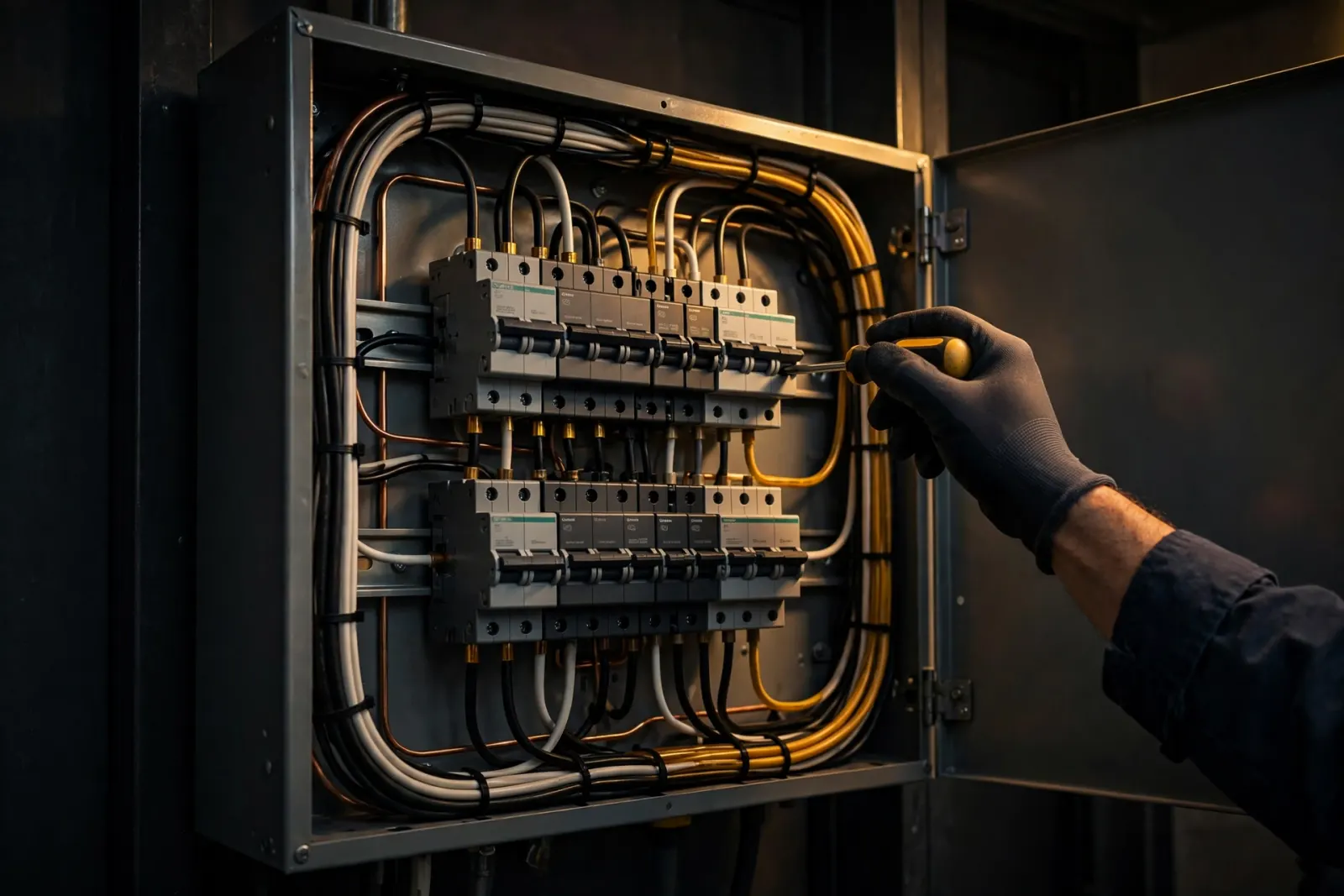
Federal Pacific panels were common in Houston homes built from the 1960s through the 1980s, and inspectors frequently flag them during sales in neighborhoods such as Spring Branch, Alief and Clear Lake. Texas insurers may ask for replacement.
After hurricanes and the 2021 winter storm, standby generators and portable-generator inlets with interlocks became some of the most requested projects in the area. Flooding is the other big factor: any outlet, panel or wiring that has been under water must be inspected before it is used again.
Federal Pacific panels are common in Dallas homes built from the 1950s through the 1980s, from Lake Highlands and Preston Hollow ranch houses to Richardson and Garland subdivisions, and Texas insurers increasingly ask about them. Electricians generally recommend replacing the whole panel, since the concern is breakers that may not trip.
Older ranch homes often have 100 amp services and limited breaker space, which becomes a problem when owners add an EV charger, a pool or a larger AC system. Some homes from the late 1960s and early 1970s have aluminum branch wiring.
Federal Pacific panels turn up often in San Antonio homes built from the 1960s through the 1980s, in neighborhoods such as Castle Hills, Oak Park-Northwood and much of the northeast side, and inspectors and insurers regularly flag them. With air conditioning running hard for months, a panel whose breakers may not trip is a real concern.
Older central-city homes often have small services and wiring from several eras, while 1950s and 1960s ranches may have 100 amp panels with little spare space. North-side growth brings EV chargers, pools and outdoor kitchens that add load.
Federal Pacific panels still turn up in Austin homes built from the 1960s through the 1980s, from Allandale and Crestview to the older suburbs, and inspectors often flag them during Austin's busy home sales. Electricians generally recommend replacing the whole panel, since the breakers may not trip.
Older central homes often have 100 amp services that struggle with central air, an EV charger and solar together. Many lots have had accessory dwelling units added, which raises questions about service size and feeders to the back of the lot.
Fort Worth's postwar neighborhoods, including Wedgwood, Ridglea Hills and much of the city's east and north sides, were built when Federal Pacific panels were common, and many homes still have them. Texas insurers increasingly ask about them.
Historic homes on the near south side often carry wiring from several eras, while 1950s and 1960s ranches may have 100 amp panels with no spare space. New construction in the north brings EV chargers, outdoor kitchens and pool equipment.
Corpus Christi's older neighborhoods along Ocean Drive, in Del Mar and on the Southside include many homes from the 1950s through the 1970s with Federal Pacific panels. Coastal insurers look closely at panel type, and salt air accelerates corrosion in old panels and meter bases.
Older homes may have original panels and wiring, and salt air corrodes meters, disconnects and AC units. Many homes run AC most of the year, which stresses older panels.
Waco's postwar neighborhoods, including Woodway-area subdivisions, Lake Shore and the areas around Baylor, were built when Federal Pacific panels were common, and many homes and rentals still have them. Inspectors routinely flag them.
Older homes may have original wiring and small services, and many near Baylor are rentals. Renovations popular in recent years often add capacity for kitchens, AC and EV chargers. Pier-and-beam foundations are common in older homes.