
Skip to content

Nationwide · Licensed electricians in 48 states + DC

Brightlane Electric

Knob-and-Tube Wiring Replacement · Connecticut

Knob-and-Tube Wiring Replacement in Connecticut

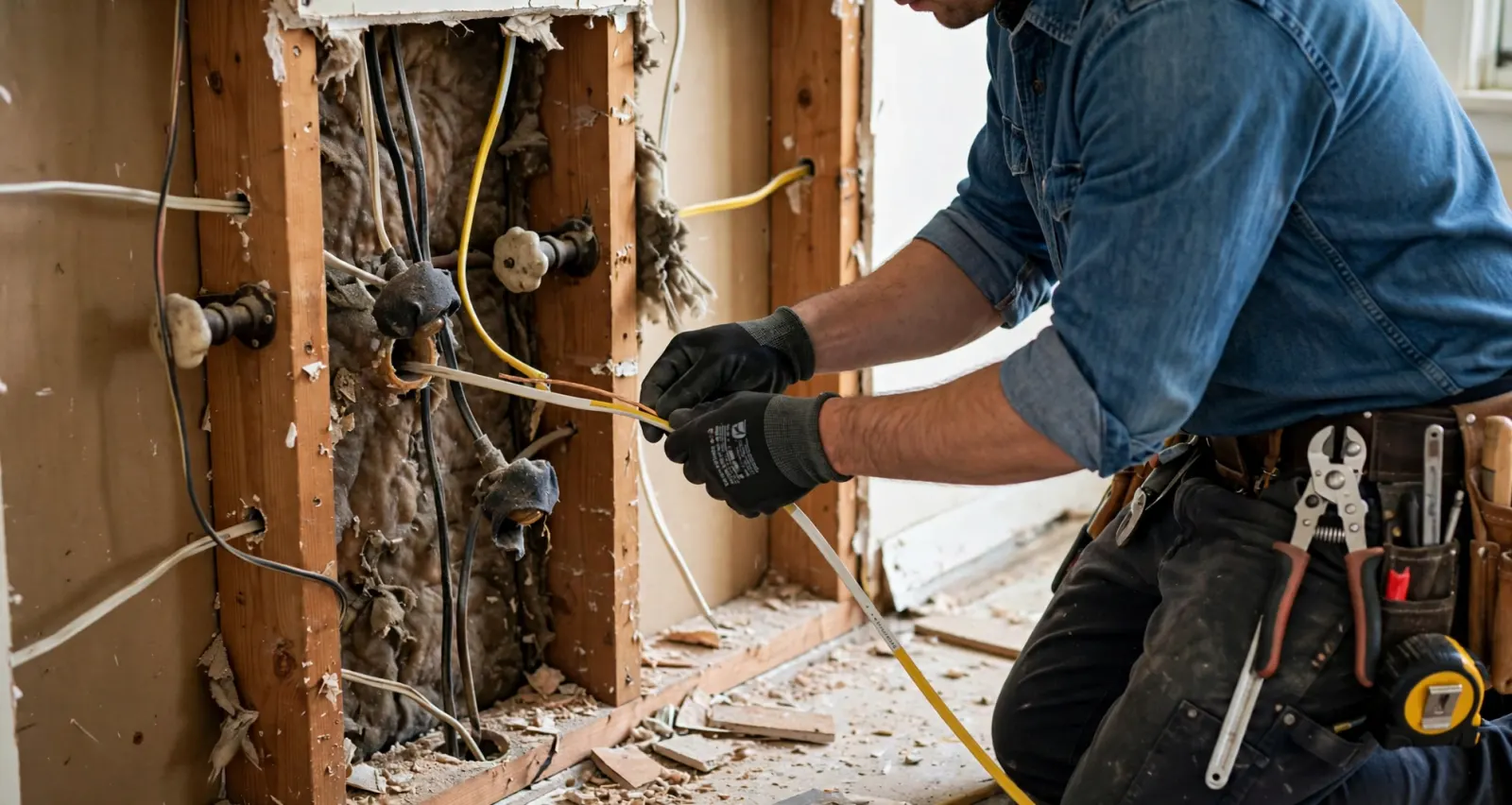
Knob-and-tube replacement removes early wiring (about 1880s to 1940s) that runs on ceramic knobs and tubes without a ground, and replaces it with modern grounded cable. It is commonly done before insulating, during renovations, or when an insurer requires it.

  • Call now to check electrician availability in your area
  • Independent, licensed electricians
  • Local notes for 4 Connecticut cities

Knob-and-Tube Wiring Replacement across Connecticut

Knob-and-Tube Wiring Replacement in Hartford, CT

Hartford's West End, Asylum Hill and Frog Hollow are full of Victorians and three-family houses built from the 1880s to the 1920s, and knob-and-tube wiring still runs through many of them. Three-family homes are usually rewired one unit at a time, using basements, stacked wall cavities and attics.

Multi-family houses usually have several small services and a meter bank, and knob-and-tube or cloth wiring is common. Heat-pump conversions, often encouraged by state incentives, usually start with a service upgrade.

Knob-and-Tube Wiring Replacement in New Haven, CT

New Haven's Wooster Square, East Rock, Fair Haven and the neighborhoods around Yale hold Victorians and multi-family houses from the late 1800s and early 1900s, and knob-and-tube wiring still runs through many of them, often in long-time student rentals. Multi-family homes are rewired unit by unit.

Multi-family homes often have a separate small service for each unit, and knob-and-tube and cloth wiring are common. Heat-pump conversions, encouraged by state incentives, usually start with a service upgrade.

Knob-and-Tube Wiring Replacement in Waterbury, CT

Waterbury's hills are lined with triple-deckers and Victorians built when the Brass City's mills were booming, and knob-and-tube wiring is still common in Overlook, Bunker Hill and the East End. In a triple-decker, the work usually means three apartments and three sets of circuits, often done one unit at a time so tenants can stay.

Triple-deckers and multi-family homes often have separate small services, knob-and-tube or cloth wiring, and decades of add-on circuits. Hillside lots affect service drop and meter locations. Many homes heat with oil or gas boilers, and owners adding heat pumps often need more capacity on the service.

Knob-and-Tube Wiring Replacement in Stamford, CT

Stamford's older neighborhoods, including Glenbrook, Springdale, the West Side and the Cove, have many homes from the early 1900s, and some still have knob-and-tube wiring, often extended over the years. Multi-family houses near downtown may have it in several units.

Older homes may have knob-and-tube or small services, and multi-family houses near downtown often have several meters. Waterfront homes face flooding and salt air. Homes on wells in North Stamford need backup power for the pump during outages.

What knob-and-tube wiring replacement involves

Knob-and-tube wiring was designed to release heat into open air. Over a century, its insulation becomes brittle, connections are often modified by later owners, and it has no ground conductor for modern three-prong outlets or GFCI-friendly appliances.

The biggest practical issue is insulation: blowing insulation into walls or attics around active knob-and-tube traps heat, so many insulation programs and contractors require it to be assessed or replaced first. Insurers also frequently ask about it.

Signs to look for

  • Ceramic knobs and tubes visible in the attic or basement
  • Two-prong outlets throughout the house
  • An insulation contractor or energy program requiring an assessment
  • An insurer asking about wiring type
  • Fuses or a small service alongside old wiring

What moves the price

  • How much knob-and-tube is still active
  • Plaster versus drywall walls
  • Attic and basement access
  • Number of floors
  • Panel upgrade at the same time
  • Wall patching and painting

Knob-and-Tube Wiring Replacement in Connecticut: questions

Where in Connecticut is knob-and-tube wiring replacement common?

Our local notes cover Hartford, New Haven, Waterbury, Stamford. Hartford's West End, Asylum Hill and Frog Hollow are full of Victorians and three-family houses built from the 1880s to the 1920s, and knob-and-tube wiring still runs through many of them.

Who issues permits for knob-and-tube wiring replacement in Connecticut?

The city or county building department where the home is. Hartford: Electrical permits in Hartford come from the city's Licenses and Inspections division; West Hartford and other towns issue their own. New Haven: Electrical permits in New Haven come from the city's building department; surrounding towns issue their own. Waterbury: Electrical permits come from the City of Waterbury's building department.

Is knob-and-tube wiring illegal?

Existing knob-and-tube is generally not illegal, but it cannot be extended, and many insurers and lenders treat it as a reason to replace.

Can knob-and-tube be insulated over?

It is not recommended, and many codes and insulation programs prohibit it, because the wiring relies on open air to cool.

How do I know if mine is still live?

An electrician can test it. Many homes have a mix of active and abandoned knob-and-tube.

Related help in Connecticut

Home Rewiring in ConnecticutFuse Box Replacement in ConnecticutGenerator Interlock Kit Installation in Connecticut240 Volt Outlet Installation in ConnecticutKnob-and-Tube Wiring Replacement in AlabamaKnob-and-Tube Wiring Replacement in ArkansasKnob-and-Tube Wiring Replacement in CaliforniaKnob-and-Tube Wiring Replacement in ColoradoKnob-and-Tube Wiring Replacement in DelawareKnob-and-Tube Wiring Replacement in FloridaKnob-and-Tube Wiring Replacement in GeorgiaKnob-and-Tube Wiring Replacement in IllinoisKnob-and-Tube Wiring Replacement in IndianaKnob-and-Tube Wiring Replacement in KentuckyKnob-and-Tube Wiring Replacement in LouisianaKnob-and-Tube Wiring Replacement in MassachusettsKnob-and-Tube Wiring Replacement in MichiganKnob-and-Tube Wiring Replacement in MinnesotaKnob-and-Tube Wiring Replacement in MississippiKnob-and-Tube Wiring Replacement in MissouriKnob-and-Tube Wiring Replacement in NebraskaKnob-and-Tube Wiring Replacement in New HampshireKnob-and-Tube Wiring Replacement in New JerseyKnob-and-Tube Wiring Replacement in New YorkKnob-and-Tube Wiring Replacement in North CarolinaKnob-and-Tube Wiring Replacement in OhioKnob-and-Tube Wiring Replacement in OklahomaKnob-and-Tube Wiring Replacement in OregonKnob-and-Tube Wiring Replacement in PennsylvaniaKnob-and-Tube Wiring Replacement in Rhode IslandKnob-and-Tube Wiring Replacement in South CarolinaKnob-and-Tube Wiring Replacement in TennesseeKnob-and-Tube Wiring Replacement in TexasKnob-and-Tube Wiring Replacement in UtahKnob-and-Tube Wiring Replacement in VirginiaKnob-and-Tube Wiring Replacement in WashingtonKnob-and-Tube Wiring Replacement in WisconsinAbout knob-and-tube wiring replacement →

Need knob-and-tube wiring replacement in Connecticut?

Call now and we connect you with a licensed electrician who serves your ZIP code.

Call now