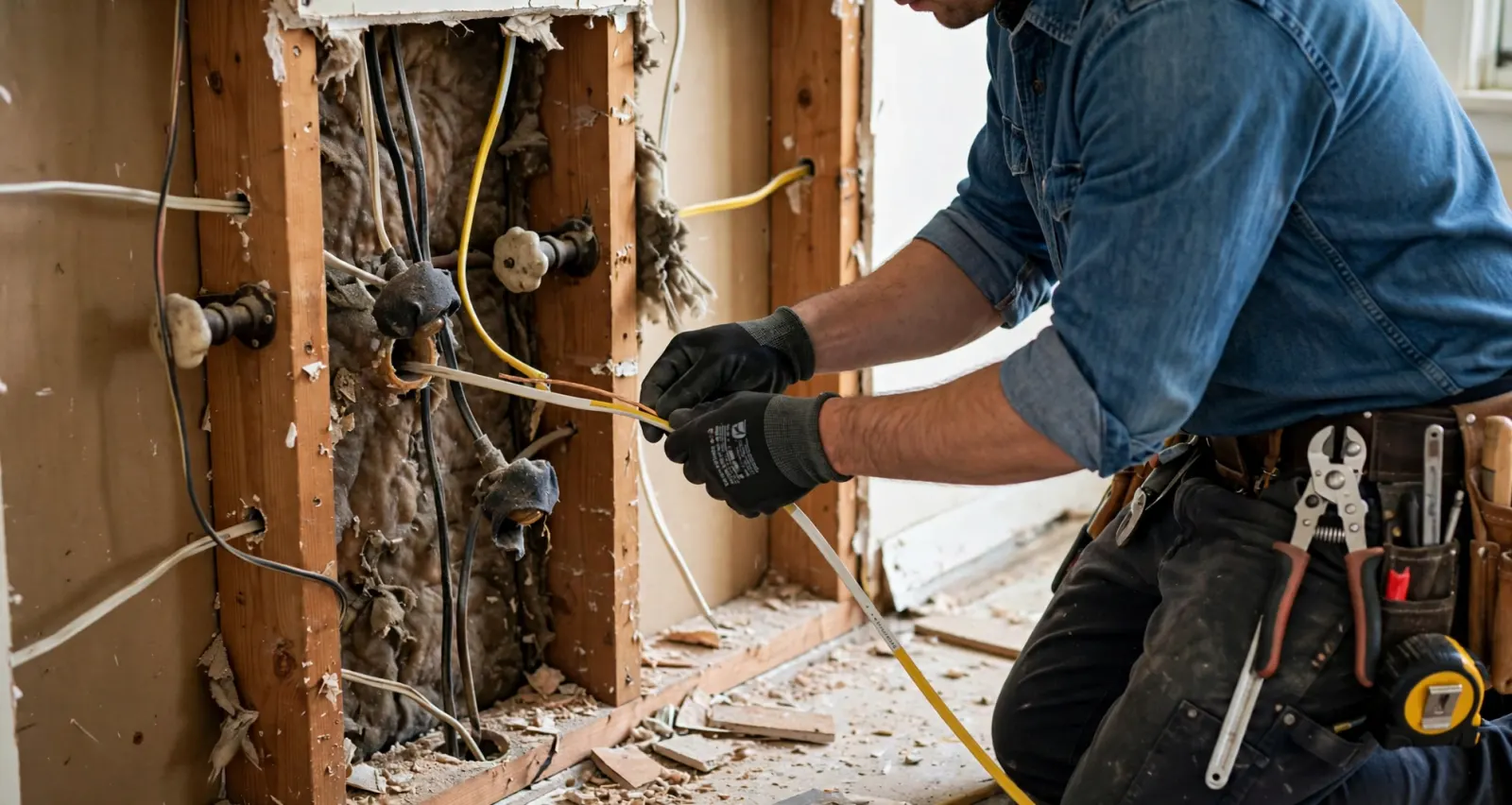
Brownstones in Park Slope, Harlem and Bedford-Stuyvesant and frame houses in Queens and Staten Island were wired at the start of the electric age, and live knob-and-tube still turns up behind plaster and lath. In a row of attached houses, routing new cable means working through floor joists, closets and the shared walls' cavities rather than opening finished walls, so jobs are usually done floor by floor.
Prewar buildings frequently have shared risers and small apartment panels. Adding a window or mini-split AC, an induction range or a dryer usually starts with checking whether the apartment feeder and the building's service can carry it, which may need the building's management to sign off.
Albany's Center Square, Park South and Pine Hills are lined with brick rowhouses and frame homes from the late 1800s and early 1900s, and live knob-and-tube wiring still turns up behind their plaster, often next to circuits added when houses were split into apartments for state workers and students. In attached brick rowhouses, new cable runs through floors, closets and interior partitions rather than the party walls, so the job is usually planned floor by floor.
Many rowhouses have been divided into apartments, with several small services and meters in the basement, and knob-and-tube or early cloth wiring is still found. Adding central air, a heat pump or an EV charger often requires a service upgrade.
Strathmore, Westcott, Eastwood and Tipperary Hill hold many of Syracuse's homes from the 1890s to the 1930s, and knob-and-tube wiring is still found in their attics and walls, often extended in student rentals near Syracuse University. Heavy snow country means many owners want more attic insulation, and insulating over live knob-and-tube is not recommended, so replacement usually comes first.
Older homes often have knob-and-tube, small services and two-family layouts with separate meters. Heat-pump conversions, often encouraged by state incentives, usually need a service upgrade.
Rochester's 19th Ward, Park Avenue, South Wedge and Corn Hill hold many homes built from the 1890s to the 1920s during the city's Kodak-era growth, and knob-and-tube wiring is still common in their walls and attics. Large houses split into apartments often have old and new wiring side by side.
Older homes often have knob-and-tube, cloth wiring and 60 amp services, and many large houses were split into apartments with several small services. Mature trees over overhead lines make storm damage to service drops common.
Buffalo doubles on the West Side, in Elmwood Village and across North Buffalo were built by the thousands in the early 1900s, and knob-and-tube wiring is still found in many, often in both the upper and lower flats. A rewire usually treats the building as two jobs, with separate circuits and panels for each unit, routed through the basement, the shared stair walls and the attic.
Doubles often have two small services, original knob-and-tube in places, and wiring changed by many owners over a century. Basements hold the panels and meters, and winter storms make backup power a real concern.