
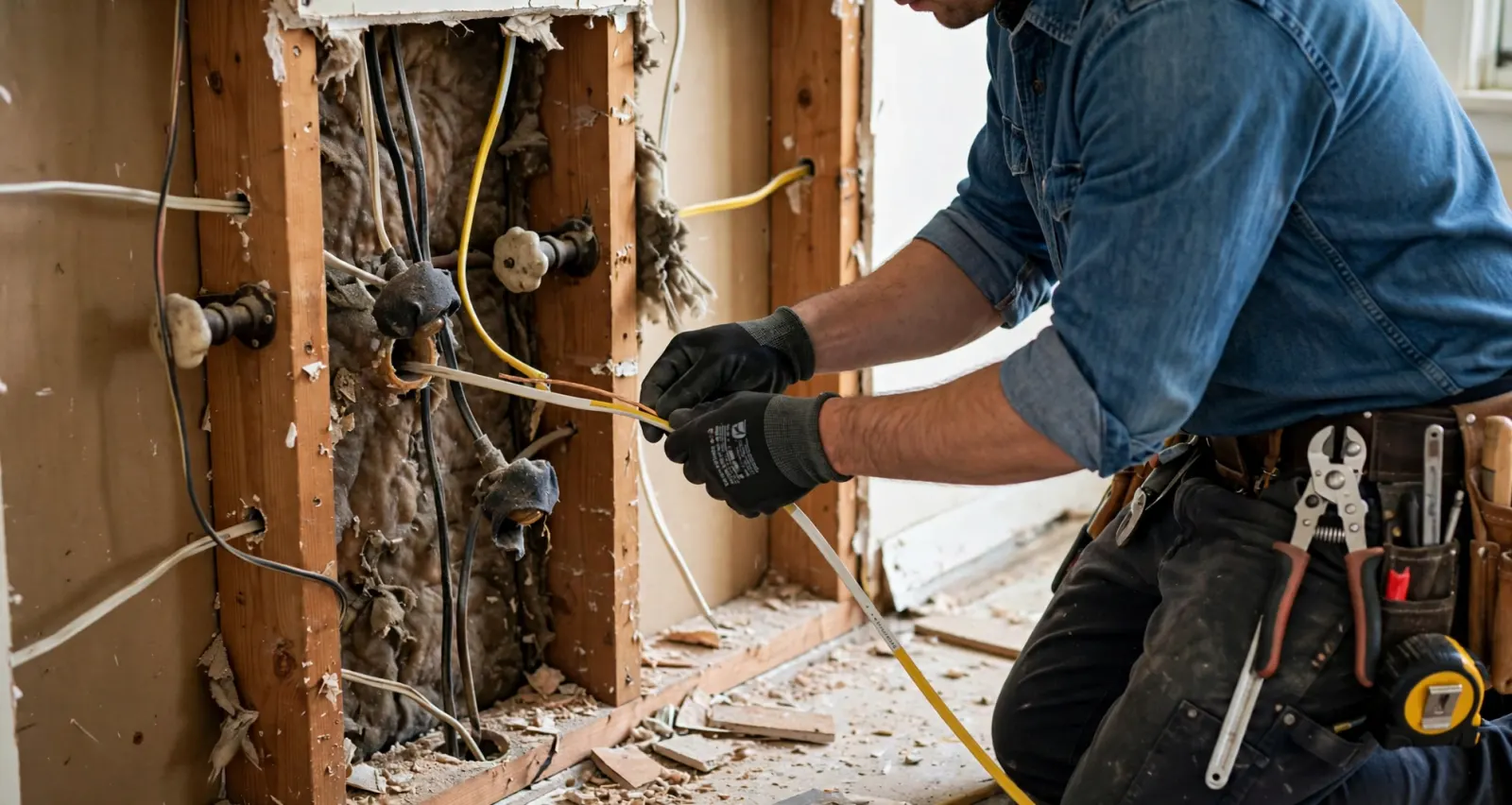
Knob-and-Tube Wiring Replacement · Greenville, SC
Knob-and-Tube Wiring Replacement in Greenville, SC
Knob-and-tube replacement removes early wiring (about 1880s to 1940s) that runs on ceramic knobs and tubes without a ground, and replaces it with modern grounded cable. It is commonly done before insulating, during renovations, or when an insurer requires it.
- Call now to check electrician availability in your area
- Independent, licensed electricians
- Serving North Main, Augusta Road, Overbrook and more
Why knob-and-tube wiring replacement comes up in Greenville
Greenville's old mill villages, built for textile workers in the early 1900s, and the larger homes of North Main and Overbrook sometimes still have knob-and-tube or very early cloth wiring. Mill houses being renovated during Greenville's boom often need complete rewiring because they were built with only a few circuits. Crawl spaces give the electrician routes for new cable.
Some mill villages and North Main areas have preservation overlays. Permits come from the City of Greenville's Planning and Development office, and Duke Energy coordinates service work. Ask for it documented.
- Older homes along Augusta Road and North Main may also have knob-and-tube or ungrounded circuits.
- An inspection before buying can reveal knob-and-tube, ungrounded outlets, undersized panels and work done without permits during quick flips.
- Permits in Greenville
- Electrical permits inside city limits come from the City of Greenville's Planning and Development office; unincorporated areas are permitted by Greenville County. South Carolina licenses electricians through LLR.
- Electric utility
- Duke Energy
Signs to look for
- Ceramic knobs and tubes visible in the attic or basement
- Two-prong outlets throughout the house
- An insulation contractor or energy program requiring an assessment
- An insurer asking about wiring type
- Fuses or a small service alongside old wiring
How the work is done
1. Trace active circuits
The electrician identifies which knob-and-tube runs are still live and where they go.
2. Plan the routes
New cable routes are planned through attics, basements and walls to minimize openings.
3. Install new circuits
Grounded cable, boxes and devices are installed and the old wiring is disconnected.
4. Inspect and patch
Rough-in and final inspections are completed, and access holes are patched.
What moves the price in Greenville
Electricians set their own prices. Mill-village houses are often small with limited circuits and small services, and many have been renovated in stages.
- How much knob-and-tube is still active
- Plaster versus drywall walls
- Attic and basement access
- Number of floors
- Panel upgrade at the same time
- Wall patching and painting
Knob-and-Tube Wiring Replacement in Greenville: questions
Do I need a permit for knob-and-tube wiring replacement in Greenville?
Usually, yes. Electrical permits inside city limits come from the City of Greenville's Planning and Development office; unincorporated areas are permitted by Greenville County. South Carolina licenses electricians through LLR. The electrician normally pulls the permit and schedules the inspection.
Is the utility involved in Greenville?
If the work affects the meter or service, the electrician coordinates with Duke Energy, which owns the meter and service drop.
Is knob-and-tube wiring illegal?
Existing knob-and-tube is generally not illegal, but it cannot be extended, and many insurers and lenders treat it as a reason to replace.
Can knob-and-tube be insulated over?
It is not recommended, and many codes and insulation programs prohibit it, because the wiring relies on open air to cool.
How do I know if mine is still live?
An electrician can test it. Many homes have a mix of active and abandoned knob-and-tube.
How long does replacement take?
From a few days for a small home with good access to a few weeks for larger plaster-walled homes.
Related help in Greenville
Knob-and-Tube Wiring Replacement in other cities
Need knob-and-tube wiring replacement in Greenville?
Call now and we connect you with a licensed electrician who serves your ZIP code.