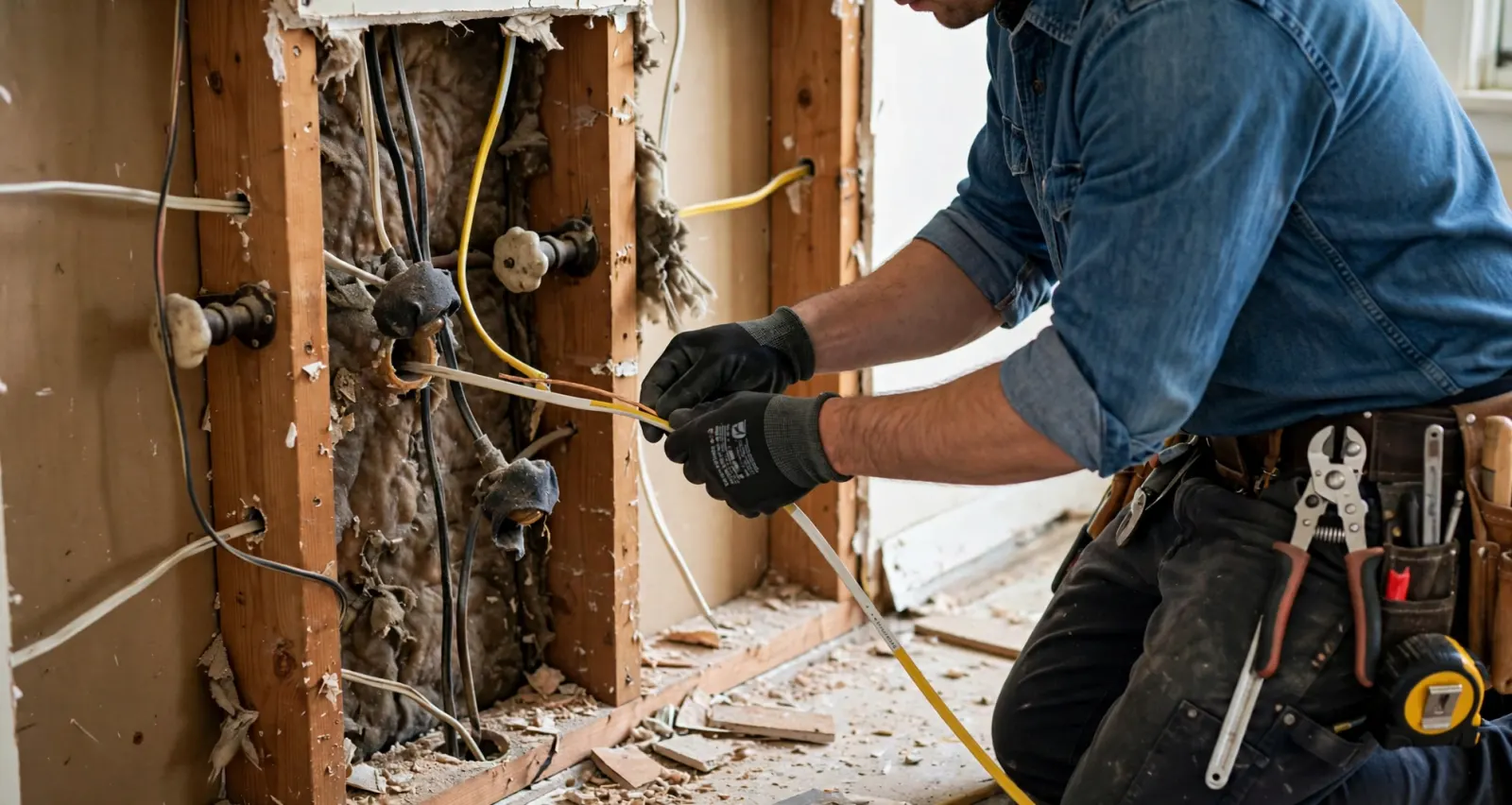
Philadelphia rowhomes built before 1940 often still have knob-and-tube wiring, and kitchen or bathroom renovations usually expose it. Rewiring a rowhome is complicated by shared party walls and plaster, so electricians fish new cable through walls and floors where they can and open plaster only where they must.
Utility: PECO
Pittsburgh's pre-1940 rowhouses and hillside homes commonly have knob-and-tube wiring, sometimes still in use behind newer circuits. Rewiring is typically done during renovations, before insulating, or when an insurer asks.
Utility: Duquesne Light
Allentown's brick and stone rowhouses in Center City and Old Allentown date largely from the late 1800s and early 1900s, and many still have knob-and-tube or cloth-insulated wiring behind plaster, sometimes alongside circuits added when houses were split into apartments. Shared walls and narrow layouts limit routes, so electricians work through basements, floors and attics.
Utility: PPL Electric Utilities
Scranton's Hill Section and Green Ridge hold large Victorian and early-1900s homes built during the coal boom, and many still have knob-and-tube or cloth wiring, often in houses split into apartments with separate meters. Rewiring usually comes up during renovation, before insulating, or when an insurer asks.
Utility: PPL Electric Utilities
Harrisburg's rowhouses in Midtown, Old Uptown and Allison Hill date from the 1870s to the 1920s, and knob-and-tube or cloth wiring still runs behind plaster in many of them, often in houses divided into apartments. Shared brick walls limit routes, so electricians work through floors, basements and attics.
Utility: PPL Electric Utilities
Lancaster's brick rowhouses in Cabbage Hill, the West End and Chestnut Hill date from the 1800s and early 1900s, and knob-and-tube or cloth wiring still runs behind plaster in many of them, often extended when houses were split into apartments. Shared brick party walls limit routes, so electricians work through floors, basements and attics, usually one floor at a time.
Utility: PPL Electric Utilities
Reading's rowhouses in Centre Park, Callowhill and the neighborhoods around Penn's Common were built during the city's railroad and textile boom, and knob-and-tube or cloth wiring still runs behind plaster in many of them. Centre Park's large Victorians, many converted to apartments, often have old and new wiring mixed throughout.
Utility: Met-Ed (FirstEnergy)
Wilkes-Barre's doubles and single homes in the Heights, South Wilkes-Barre and Parsons were built for coal miners, merchants and railroad workers from the 1880s to the 1920s, and knob-and-tube or cloth wiring still runs through many of them. A double usually means two rewiring jobs, one for each side, with separate panels and services.
Utility: PPL Electric Utilities