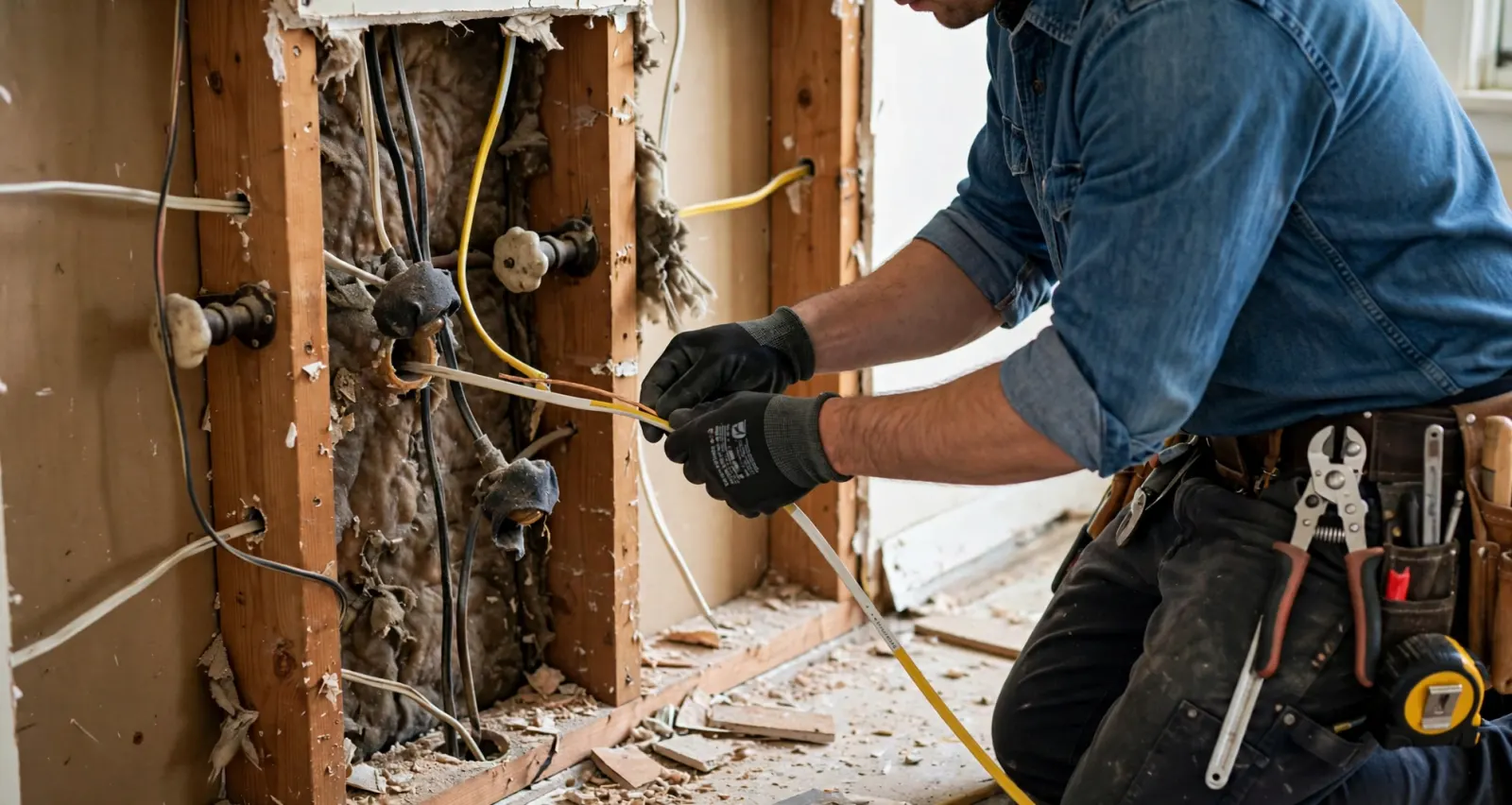
Houston's Heights, Montrose and Third Ward hold bungalows and early-1900s homes that sometimes still have knob-and-tube or cloth wiring, and homes that flooded during Harvey in 2017 often had wiring replaced only up to the flood line, leaving old wiring above. Rewiring usually comes up during renovation, after flooding, or when an insurer asks.
Utility: CenterPoint Energy (lines and meters); retail provider of your choice
Some Dallas-area homes from the late 1960s and early 1970s were built with aluminum branch wiring, which can overheat at connections. Not every affected home needs a full rewire; repairs using approved connectors at each outlet, switch and splice are an accepted alternative, and an electrician can explain which fits your home.
Utility: Oncor (lines and meters); retail provider of your choice
San Antonio's King William, Monte Vista and Tobin Hill neighborhoods hold Victorian and early-1900s homes, and many still have knob-and-tube or cloth-insulated wiring alongside later circuits. Rewiring is often done as part of a restoration, with raised pier-and-beam foundations giving the electrician a crawl space route.
Utility: CPS Energy (city-owned)
Hyde Park, Travis Heights, Clarksville and Bouldin Creek hold many homes from the early 1900s to the 1940s, and some still have knob-and-tube or cloth-insulated wiring mixed with circuits added over the decades. Rewiring usually comes up during renovations, which are common as these central neighborhoods have grown in value, or when an insurer asks.
Utility: Austin Energy (city-owned)
Fairmount, Ryan Place and Arlington Heights hold some of Fort Worth's oldest homes, many built between 1900 and the 1930s, and some still have knob-and-tube or cloth wiring alongside circuits added for central air and modern kitchens. Rewiring usually comes up during restoration or when an insurer asks, and Texas insurers often ask about wiring age after hail claims.
Utility: Oncor (lines and meters); retail provider of your choice
Sunset Heights, Kern Place and Manhattan Heights hold many of El Paso's homes from the early 1900s to the 1930s, including brick and stucco houses with original wiring that may include knob-and-tube or cloth cable. Rewiring usually comes up during restoration, when adding refrigerated air, or when an insurer asks.
Utility: El Paso Electric (not on the ERCOT grid; no retail choice)
Denton's Oak-Hickory historic district and the neighborhoods near downtown hold homes from the 1900s to the 1940s, many of them rentals for students at the University of North Texas and Texas Woman's University, and original cloth wiring and ungrounded outlets are common. Pier-and-beam foundations give the electrician a crawl space route.
Utility: Denton Municipal Electric (city-owned)
Older Corpus Christi homes along Ocean Drive and in Del Mar date from the 1930s to the 1950s and may have original wiring, ungrounded outlets and connections corroded by salt air. Mid-century homes may have aluminum branch circuits.
Utility: AEP Texas (lines and meters); retail provider of your choice
Castle Heights and Sanger Heights hold many of Waco's homes from the early 1900s to the 1940s, and some still have knob-and-tube or cloth wiring mixed with circuits added for central air. Waco's renovation boom has brought many of these homes back, and rewiring is often part of the work.
Utility: Oncor (lines and meters); retail provider of your choice
Tyler's Azalea District and Brick Street District hold some of East Texas's finest homes from the 1910s to the 1940s, and many still have original cloth wiring, ungrounded outlets and circuits added piecemeal as central air arrived. Pier-and-beam foundations give the electrician a crawl space route for new cable.
Utility: Oncor (lines and meters); retail provider of your choice