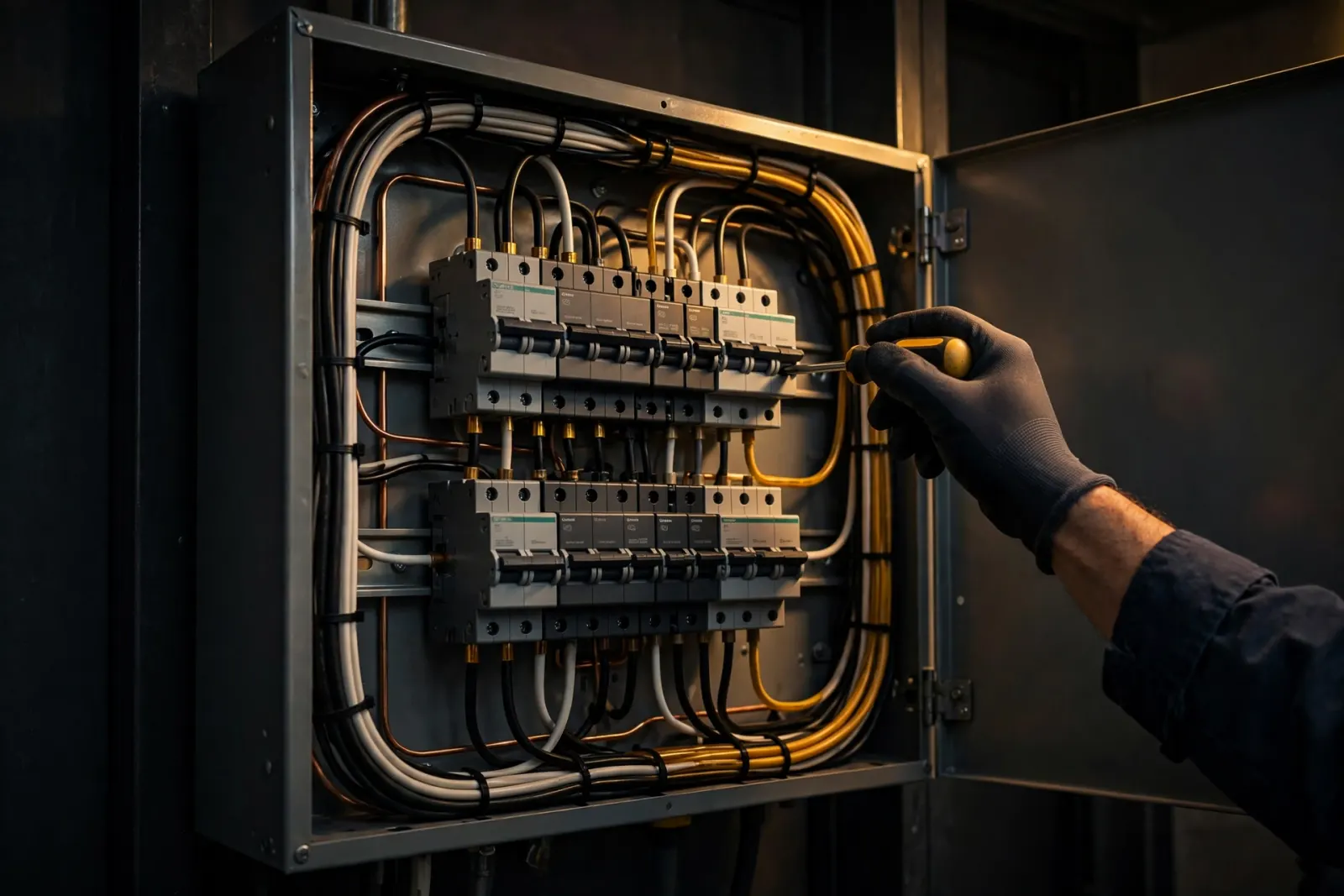
Electrification drives most panel upgrades in Los Angeles. A 1920s craftsman or a 1950s tract house with a 60 or 100 amp service often cannot support an EV charger, a heat pump, an induction range and rooftop solar together.
Utility: LADWP (city of Los Angeles)
San Diego has one of the highest rates of rooftop solar in the country, and a panel's bus rating often limits how much solar can be connected without an upgrade or main-breaker derate. Adding a battery, an EV charger or a heat pump to a 1950s Clairemont tract home or a North Park craftsman with a 100 amp panel usually needs a closer look.
Utility: SDG&E
Older Sacramento homes in Land Park, East Sacramento and Curtis Park often have 60 or 100 amp services, and adding a heat pump, an EV charger or rooftop solar commonly means an upgrade. SMUD, the city's publicly owned utility, handles the meter and service drop and has its own process for service changes and solar interconnection.
Utility: SMUD (publicly owned)
San Francisco flats often have several small services fed from a meter bank, and electrification projects such as heat pumps, induction ranges and EV charging usually need more capacity than a 60 or 100 amp service can supply. Garages with tight clearances can limit where a new panel or meter can go.
Utility: PG&E (lines and meters); CleanPowerSF for most customers' supply
Electrification is the biggest driver of panel upgrades in San Jose: heat pumps, induction ranges, heat-pump water heaters, EV chargers and solar often all end up on a panel that dates to the original 1950s or 1960s build. Some older homes still have Zinsco or Federal Pacific panels that electricians commonly recommend replacing.
Utility: PG&E (lines and meters); San José Clean Energy for most customers' supply
In Fresno, panel upgrades usually start with the heat. A post-war tract home with a 100 amp panel may already be near its limit when the central air runs through a long July afternoon, and adding rooftop solar, a battery or an EV charger on top of that often means a new panel or service.
Utility: PG&E
Riverside's postwar neighborhoods in La Sierra, Arlington and around the university were built when Zinsco and Federal Pacific panels were common, and many homes still have 100 amp services. Adding rooftop solar, a battery, a heat pump, a larger AC system or an EV charger usually requires a new panel.
Utility: Riverside Public Utilities (city-owned)
In Bakersfield, many older homes in Westchester and Oleander-Sunset still have the 60 or 100 amp service they were built with, sized for a time before central air. Replacing an aging swamp cooler with refrigerated air, adding a pool, rooftop solar or an EV charger often pushes the panel past its limit.
Utility: PG&E
A 1920s bungalow in California Heights or a 1950s Los Altos tract house typically came with a 60 or 100 amp service, and Long Beach homeowners adding an EV charger, a heat pump, an induction range or rooftop solar often outgrow it. Southern California Edison handles the meter and solar interconnection, and the work is permitted by Long Beach Development Services, not by Los Angeles.
Utility: Southern California Edison
Electrification is the main driver of panel upgrades in Oakland. Older flatland homes often have 60 or 100 amp services that cannot carry a heat pump, induction range, heat-pump water heater and EV charger together.
Utility: PG&E (lines and meters); Ava Community Energy for most customers' supply
Stockton's mid-century neighborhoods such as Lincoln Village and the areas around the Miracle Mile have many homes with original 100 amp panels or brands electricians suggest replacing, and owners adding central air, rooftop solar, a battery or an EV charger often need an upgrade. California's solar rules limit how much a panel can backfeed, which sometimes requires a larger panel even before more capacity is needed.
Utility: PG&E
Thousands of West Anaheim homes were built in the 1950s and 1960s, and many still have their original 100 amp panels, some with brands electricians suggest replacing. Owners adding solar, a battery, a heat pump, an EV charger or an accessory dwelling unit often need a larger panel or a service upgrade.
Utility: Anaheim Public Utilities (city-owned)
Modesto's postwar neighborhoods in the College Area and around Graceada Park, and the large subdivisions of the 1960s and 1970s, often have original 100 amp panels, many of them Zinsco or Federal Pacific. Adding rooftop solar, a larger AC system, a heat pump or an EV charger usually requires a new panel.
Utility: Modesto Irrigation District (public utility)
In Pasadena, the electric utility is city-owned Pasadena Water and Power, not Southern California Edison, so service upgrades, meters and solar interconnection go through PWP. Older craftsman homes often have 60 or 100 amp services that cannot support heat pumps, induction cooking, EV chargers and solar together.
Utility: Pasadena Water and Power (city-owned)
Homes rebuilt in Coffey Park and Fountaingrove after 2017 usually have new 200 amp panels, but older homes elsewhere in Santa Rosa may have 100 amp services or Zinsco and Federal Pacific panels. Adding solar, a battery, a heat pump or an EV charger often requires a new panel, and California's solar rules limit how much an older panel can accept.
Utility: PG&E